
Sales and stock
Link deliveries, sales, returns and corrections to the correct product and location.
Retailers managing returns, product variants or multiple locations across disconnected tools.
Retail software connects the work around products, sales and stock across shops and online channels. We develop or integrate the customer, till, inventory and reporting workflows needed to keep those activities consistent.
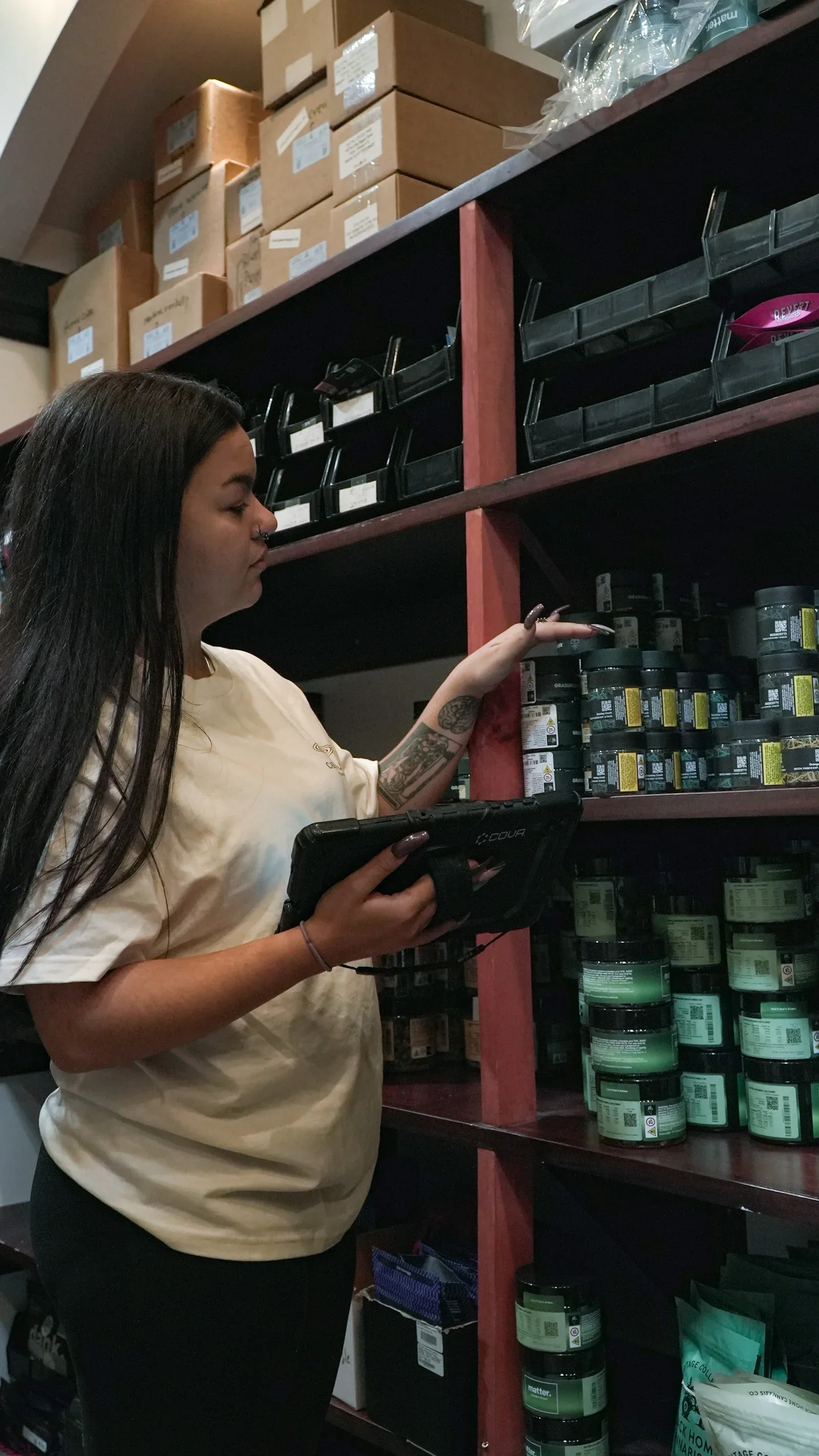 RETAIL / MULTI-STORE WORKFLOWS
Retailers managing returns, product variants or multiple locations across disconnected tools.
Link deliveries, sales, returns and corrections to the correct product and location.
Assess shared product and availability updates between shops and ecommerce.
Separate store actions from central price and product administration.
Track meaningful exceptions and reconcile figures with recorded transactions.
A last-item sale in a store should trigger the agreed stock update so the online channel can handle availability according to a tested rule.
This describes a possible scope, not a claimed client result.A sales/stock workflow map, agreed platform connections or modules, branch roles, pilot tests and rollout handover.
Improve the existing retail platform first when its supported features cover the need.
For a UK operation, test a representative sale, return, delivery and stock adjustment using the actual channels and provider accounts. If several stores share inventory, decide which location owns the goods while a transfer is in transit.
Optimal Designz is operated by Optimal Design Solutions SMC-PVT Ltd., registered in Pakistan. Delivery arrangements, supported languages, system compatibility and ongoing support are confirmed in the written scope; this country edition does not imply a local office.
Have a similar task in mind? Share your current tools, the people involved and one complete example.
Discuss this requirementRetail software connects the work around products, sales and stock across shops and online channels. We develop or integrate the customer, till, inventory and reporting workflows needed to keep those activities consistent.
Good scope comes from understanding the setting, current tools and the people who rely on each workflow.
Potential project areas include POS and EPOS integrations, inventory management, supplier and purchase workflows, ecommerce connections, customer records, branch reporting and operational dashboards. We begin by mapping the current systems and identifying where information is duplicated, delayed or difficult to access.
Retail technology should support staff at the point of work. We consider product structure, variants, returns, stock movements, permissions, branch differences and reporting definitions. Where an established platform already meets the need, integration may be more practical than custom development.
Bring the right users and examples into the process, including the everyday exceptions a generic brief can miss.
We start with discovery and workflow mapping, define priorities and system boundaries, design the user experience, develop or integrate the agreed solution, test with representative users and plan rollout and support. The exact process is tailored to project size and complexity.
For connected workflows in this sector, explore POS and EPOS software; inventory management; payment and POS integrations; ecommerce integrations; or discuss a retail project. Follow the pages that match your needs rather than treating every connection as necessary for your project.
Explore the supporting detail after reviewing the capabilities and project choices.
Retail businesses need accurate, timely information across sales, stock, suppliers, online channels and locations. We help retailers plan digital systems around the way their operation works—whether the need is a better-connected stack, a tailored workflow or a new application.
A customer buys the last item in a shop while another customer orders it online. Whether the resulting problem is prevented depends on where stock is recorded, when sales are synchronised and how reservations are handled. The same design questions appear around returns, damaged stock, staff discounts and transfers between branches. Understanding these events helps determine whether new software is required or whether existing tools can be connected.
Map the sales channels, product variants, stock locations, supplier deliveries and reports used by managers. Confirm how the till behaves if the internet is unavailable and how end-of-day totals are reconciled. Keep store staff involved in testing: a workflow that works in a meeting may be too slow when customers are waiting.
Retail inventory systems need to reflect deliveries, transfers, reservations, returns and stock corrections—not just the number of items sold. Retail POS integration becomes important when a transaction should update available stock or financial reporting. Before selecting retail management software, it is worth checking how product variants, promotions and staff permissions work across the organisation. Multi-store retail software brings questions about branch-level differences, central pricing, local stock and what managers need to see. Retail operations software should make exceptions visible rather than relying on off-system notes. Our retail software solutions UK discussion focuses on mapping a representative sale, return and replenishment cycle before deciding which systems need changing.
Practical answers to help you compare options and prepare for a useful project conversation.
Retailers managing returns, product variants or multiple locations across disconnected tools.
Retail software connects the work around products, sales and stock across shops and online channels. We develop or integrate the customer, till, inventory and reporting workflows needed to keep those activities consistent.
Retail management software can sometimes connect EPOS, ecommerce and stock records. Agree product IDs, availability rules and which system owns each transaction before expecting a reliable shared view.
Deliveries, transfers, reservations, returns, damaged stock, adjustments and physical stock counts all matter. A single quantity can be misleading if locations and stock states are not distinguished.
A good integration updates movements consistently and flags failed messages. Test promotions, returns, exchanges, offline tills and online orders because these are common sources of discrepancies.
It can be designed to separate branch-level figures from central reporting. The project should also define local pricing, permissions and how items move between locations.
Not by default. Start with established retail products and approved connectors. Custom work is worth considering when an important workflow cannot be supported sustainably by existing tools.
Potentially, if online orders can reserve stock, staff receive clear collection tasks and cancellations release the reservation. Define what customers see when an item is unavailable.
Useful views might cover sell-through, stock exceptions, refunds, margins or branch performance. Define how each metric is calculated, especially if the source applications disagree.
Bring examples of a purchase, sale, return, transfer and stock count, alongside the current EPOS and ecommerce platforms. Real examples reveal requirements faster than a generic feature list.
Share your store locations, sales channels, till platform and the stock or reporting problem you want to resolve.
May we use Google Analytics to understand website visits and completed enquiries? It’s optional, and you can change your choice at any time.
Cookie information